Table Of Content

Among the revisions that will be included in the new AR — last updated in 2017 — include changes that have already been announced such as the Army Green Service Uniform and the Expert Soldier Badge. U.S. Army hair regulations and grooming standards are comparable to other branches of the Armed Forces. A recent update to grooming standards is the removal of female members having to observe a minimum length of 1/4 inch from the scalp. Soldiers can wear hijabs when they have an approved religious accommodation request.
Army Eyeglasses, Sunglasses and Contact Lenses Regulations
They expect all soldiers to always maintain a uniform and professional look. WASHINGTON -- The U.S. Army has announced major revisions to Army Regulation 670-1, Wear and Appearance of Army Uniforms and Insignia, which will include guidance on wearing the new Army Green Service Uniform and several other key changes. In addition, the Army is also revising its grooming standards to support its People First priority and diversity and inclusion efforts. The push to change the Army's grooming standards proves that the force is evolving and making a concerted effort to make everyone feel included, said Master Sgt. Quintana Mitchell, the uniform policy NCO for G-1. Along with hair standards, the Army is allowing women to wear lipstick and nail polish — something that used to be allowed but was later outlawed. The new standards will also allow men to wear clear nail polish if they wish, which could be used to protect their nails if they “serve in the job specialties that have to deal with harsh chemicals,” for instance.
Army Haircut Styles
“Loose, graduated hairstyles” as well as “layered hairstyles” are permitted with extra clarifications. Medium hair is authorized when it falls naturally in uniform and does not have to be secured. It’s defined as a hair length that does not extend beyond the lower edge of the collar in all types of Army uniforms. Leaders are expected to use good judgment in order to determine if the hair color is considered appropriate. Thus, in the absence of specific procedures or guidelines for gauging if a hairstyle is acceptable, commanders are asked to exercise personal judgment regarding the matter. According to Paragraph 3-2 of AR 670-1, mustaches can not extend past the corners of the mouth (imagine a vertical line drawn upward from the corners of the mouth).

Women’s Hair Styles That Are Not AR 670 1 & Army Approved
Also, soldiers must keep mustaches below the lowest part of the nose. According to an information paper posted by Deputy Chief of Staff for Personnel Lt. Gen. Gary Brito’s office, the update is part of the Army’s efforts to promote diversity and inclusion. The updates reflect the Army’s commitment to fostering an environment that promotes and facilitates diversity, equity, and inclusion. Inclusive policies foster the ability to recruit and retain the top talent. Army uniforms embody the professionalism and commitment to the Army Values.
British army ends century-old ban to allow troops to grow beards - The Guardian
British army ends century-old ban to allow troops to grow beards.
Posted: Fri, 29 Mar 2024 07:00:00 GMT [source]
The authorized beard, which includes facial and neck hair, should not exceed 2 inches in length when measured from the bottom of the chin. Oh, and by the way, did you know that soldiers carry a lot of cool stuff when they’re out there doing their thing? If you’re curious to see what’s in their backpacks when they’re rucking or in combat, check out our compiled list of things soldiers carry in their rucksack. Completely shaved heads used to be against the rules that required hair to be at least 1/4 inch long. Maj. Faren Aimee Campbell, who works in Army logistics in Silver Spring, Md., experienced hair loss and damage from keeping her hair in a bun.
Updated Rules on Women’s Hair in the Army
Along with supporting a Soldier's identity, the Army approved the use of additional colors of lipstick and nail polish, including the wear of clear nail polish by male Soldiers. Females also have the option to wear an American manicure, a two-tone nail style that maintains a natural appearance. Under the current regulation, Soldiers are only authorized to dye, tint, or bleach their hair.
Your Guide to Army Grooming Standards (Including Latest Changes)
In the facial hair section of the regulations, the word “Fu Manchu” will be removed, for example, as it “has been considered offensive to Asian Culture,” the slides say. “In an effort to stop hair damage and loss stemming from hairstyles like the bun, the Army approved healthier hairstyle options that are more inclusive of various natural styles,” said Clark. The Army plans to authorize the wear of highlights if it presents a natural appearance and is not a prohibited color, Sanders said.
AR 670-1 Physical Fitness Regulation
Whether you’re wearing your military uniform or civilian clothes on duty, you need to follow the rules set for hair as your appearance can impact your performance. Leaders will decide if a hairstyle is appropriate by looking at the guidelines in the rules and whether you can wear your headgear and protective equipment properly. In other changes this year, hair highlights are now allowed in natural colors, lipstick and nail polish allowed in "non-extreme" colors for women, earrings allowed for women in combat uniforms, and clear nail polish allowed for men. Additional Army hair regulation updates remove the requirement that hair must present a tapered appearance.
AR 670 1 Army Hair Regulations Simplified
It’s assumed that when each soldier maintains a “clean-cut” appearance that the military unit as a whole is well organized and detailed. Teresa Tennyson is a retired army officer who served in several countries in the Middle East. As an Arabic lingual and cultural specialist, her assignments included combat deployments and a diplomatic tour. Veterans with wartime service who were honorably discharged can also wear uniforms, according to Paragraph 23-4 of AR 670-1. The regulations restrict ceremonial attire to service and dress uniforms only. Women must wear braids and ponytails down the center of their backs.
Moving on to medium hair, it’s defined as hair length that doesn’t go beyond the lower edge of the collar in all uniforms. The great thing about medium hair is that it can naturally fall while you’re in uniform, providing a comfortable and professional appearance. The Army, which is increasingly dependent on female soldiers, has issued new regulations that allow women to wear lipstick and no longer limits their hair to a tight, disciplined bun.
Though there has been recent talk of loosening beard policy, the Army has not yet revised its longstanding policies banning beards and restricting mustaches as of the latest round of updates. Highlights also can’t be unnatural colors, such as purple, blue, green, pink, bright red, fluorescent or neon. You can serve part-time as a Soldier in the Army Reserve or the Army National Guard. By serving part-time, you are able to continue your college education or work a civilian job, while earning an extra paycheck and maintaining many of the benefits of military service. The top hair must still conform to army regulations, i.e., it must not be excessively bulky or fall over the ears or eyes. There is more as far as prohibited hairstyles and authorized hair accessories go.
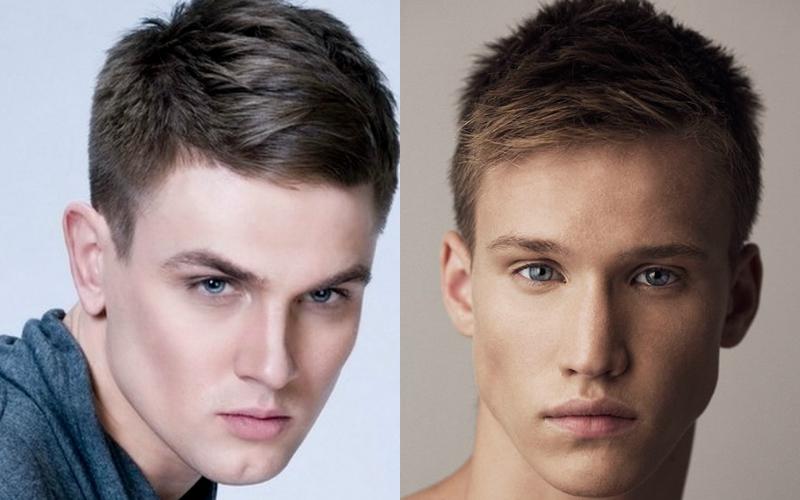
This is one of the most common military haircuts that involves shaving all the hair to a short length, typically 1/4 inch or shorter, creating a uniform appearance across the head. A wide-ranging set of changes to the uniform and grooming regulations is set to hit the Army, with many new details covering everything from ponytails to earring allowances. Hair regulations are meant to reinforce uniformity in the military, but many women — specifically Black women — have said that the stringent regulations don’t take into account different textures and lengths of hair. Under the new policy, medium-length ponytails are only authorized for wear on the back of the scalp and cannot exceed the head's width or interfere with the proper wear of a Soldier's headgear. Starting with short hair, it refers to hair that doesn’t extend beyond the bottom edge of the collar.
Approved hairstyle changes include no minimum hair length for female Soldiers, allowing multiple hairstyles at once (i.e. braiding, twists or locs). Soldiers will be able to wear ponytails if unable to form a bun, and may wear long ponytails while conducting physical training, in the combat uniform or when female Soldiers wear equipment such as, but not limited to, combat helmets. The grooming standard changes make it easier and safer for women to secure natural hair of all types in garrison and combat headgear. Previous hairstyle regulations that required soldiers to wear long hair in a tight bun damaged soldiers’ hair and scalps.
Soldiers are required to maintain good personal hygiene and grooming on a daily basis, as well as wear the uniform in a way that does not detract from the overall military appearance. Army mustache regulation is tightly enforced as soldiers are expected to otherwise keep their face clean-shaved when in uniform. Army is not allowed, aside from mustaches and under the guidelines beards as part of religious practice in AR 670-1. For example, braids or fashionable styles must conform to all hair and appearance standards. The Army determined that women attending Ranger, Special Forces, or Sapper training desired short hair while training in austere training environments.


No comments:
Post a Comment